WE Predictive Maintenance Platform
Built on vibration mechanisms and mathematical models, WE delivers online monitoring, fault early-warning and remaining-useful-life prediction for rotating equipment such as motors, fans, air compressors, pumps and CNC spindles — turning reactive repair into proactive prevention and cutting unplanned downtime.
Platform Positioning & Core Capabilities
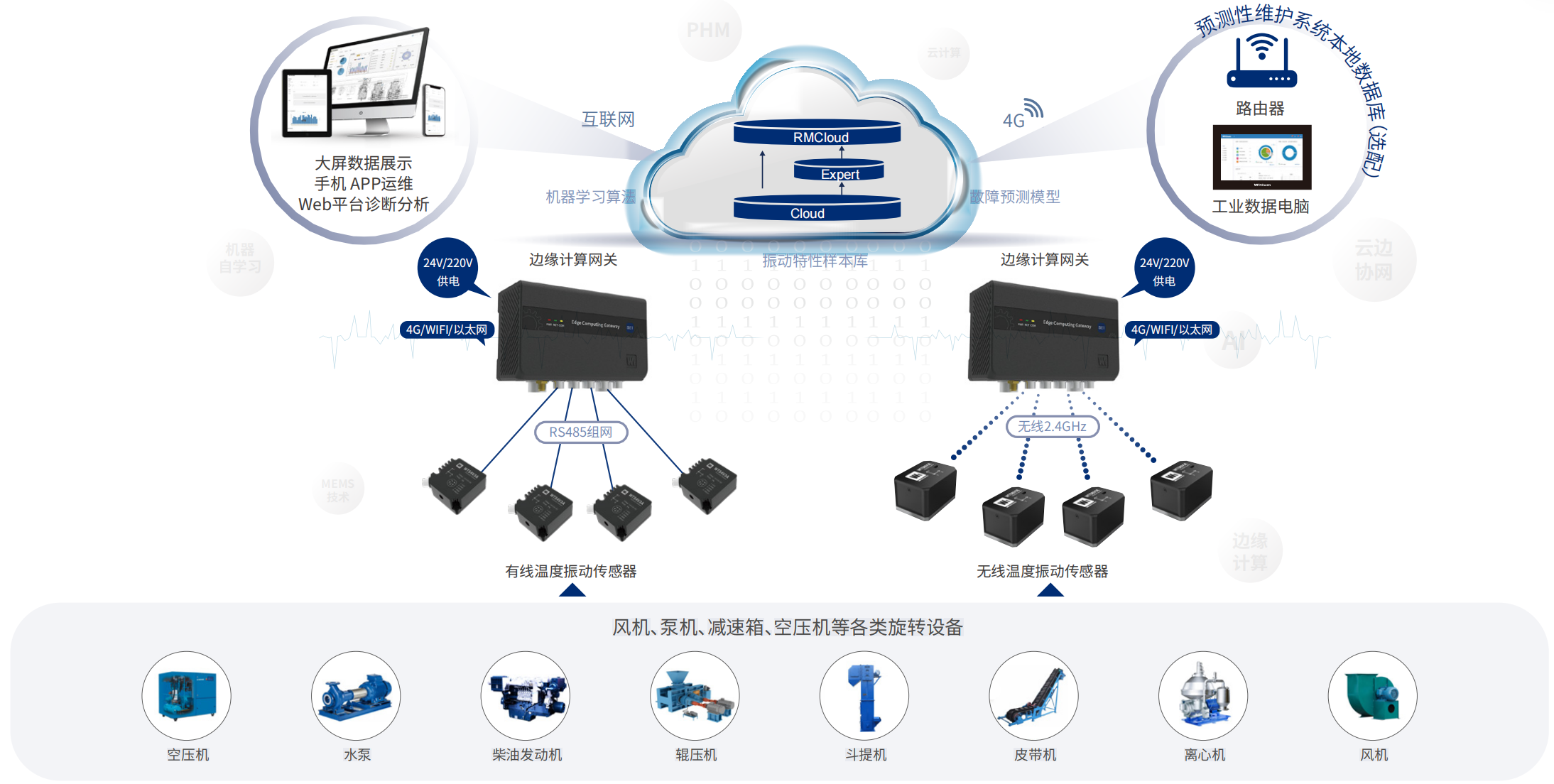
I. Platform Overview
The positioning and value of the WE Predictive Maintenance Platform.
- Faults in rotating equipment (motors, fans, pumps, air compressors) are often sudden, and unplanned downtime is enormously costly; traditional time-based maintenance is either too frequent and wasteful, or misses faults and leads to accidents.
- WE uses multi-source signals such as vibration, temperature and current, combined with mechanism and mathematical models, to deliver condition assessment and life prediction.
- Working with the DVS data-collection platform and AIS-G160 protocol acquisition, WE forms a "perception — analysis — decision — work order" closed loop.
II. Core Capabilities
Key capabilities of the platform for industrial sites.
- Multi-source signal acquisition: vibration (acceleration / velocity), temperature, current, etc., connected via AIS-G160 or sensor gateways.
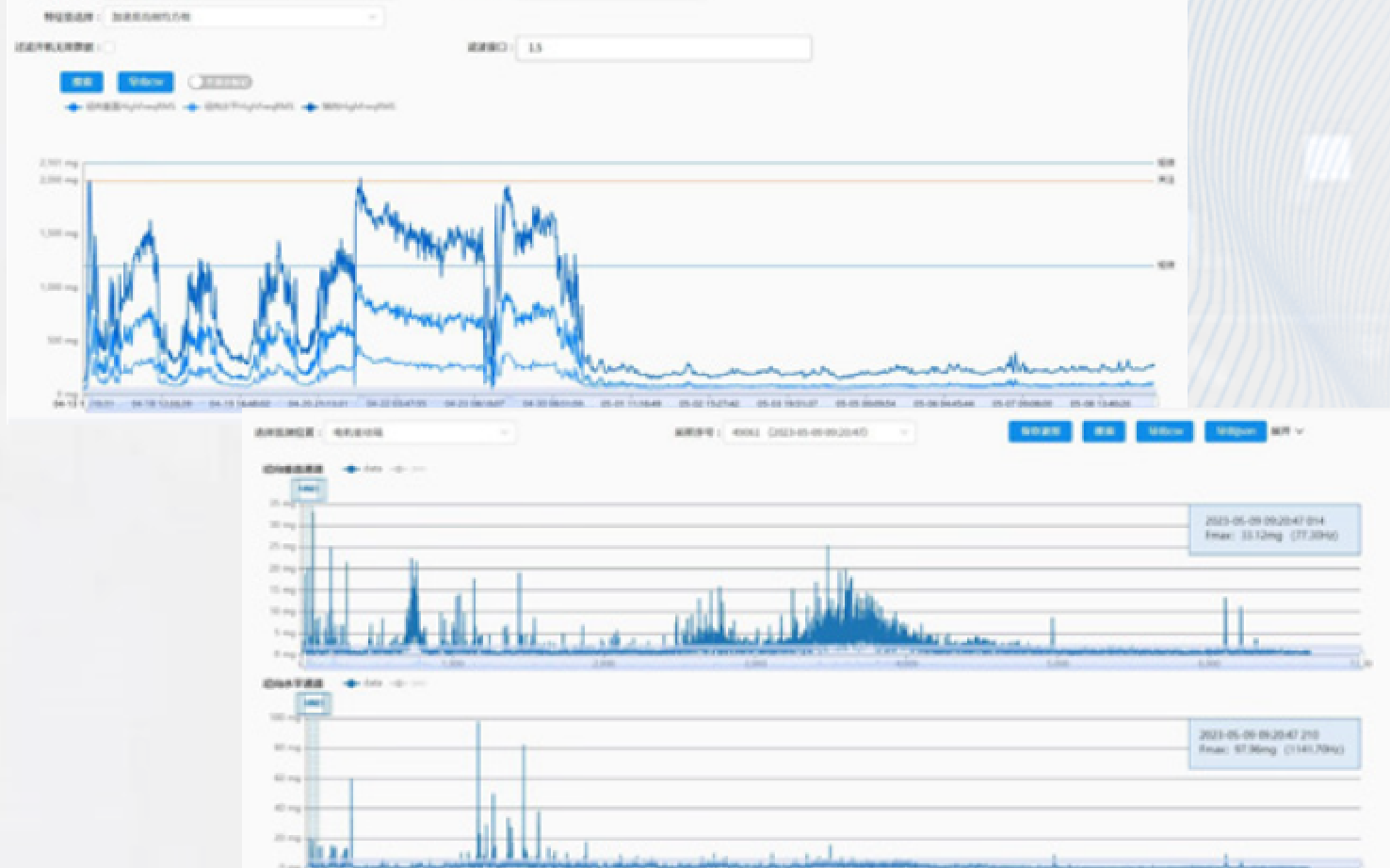
- Feature extraction and mechanism models: FFT spectrum, envelope demodulation, trend analysis to identify bearing wear, imbalance, misalignment and gear defects.
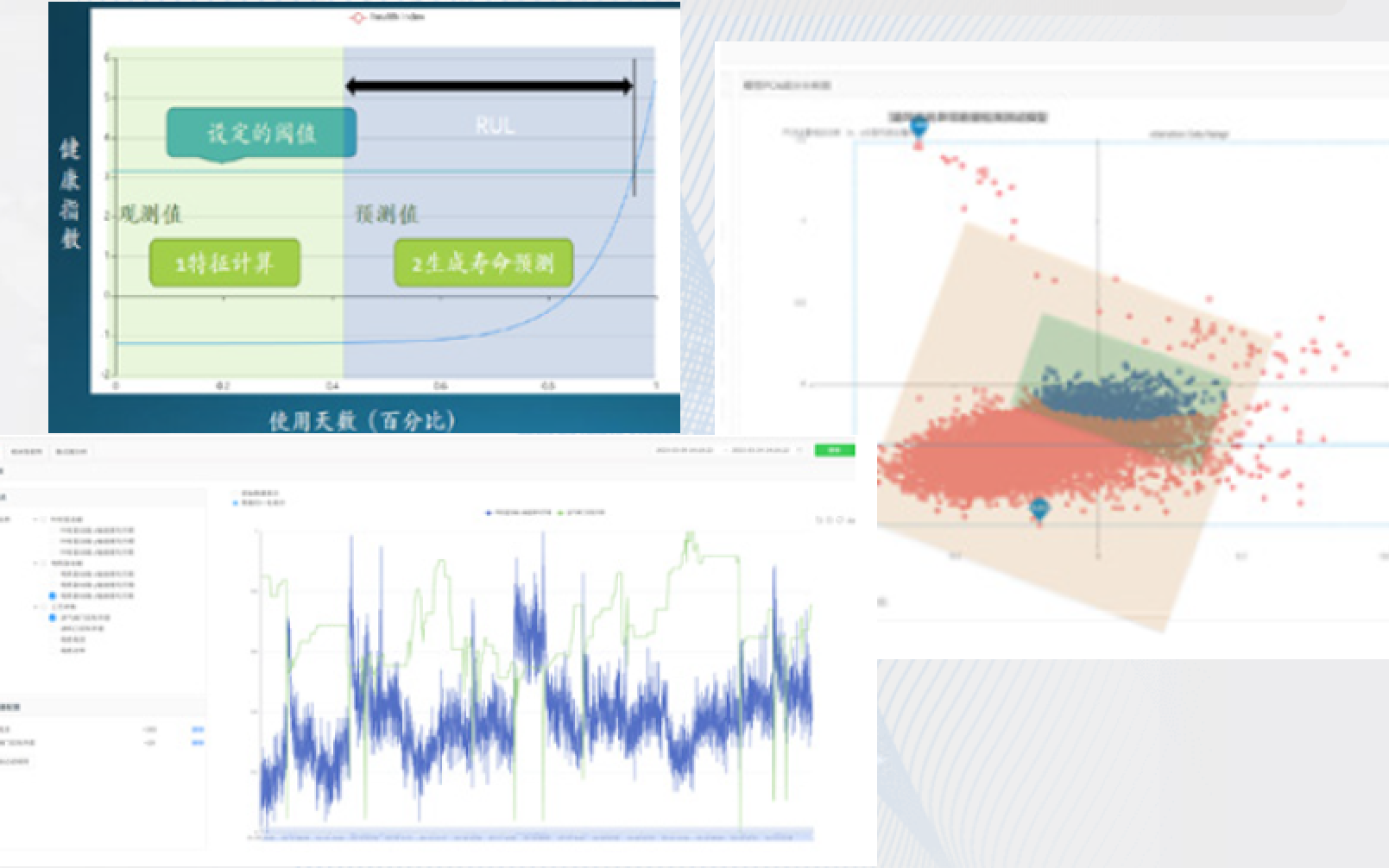
- Fault early-warning: health-index scoring based on thresholds and models warns of potential faults days to weeks ahead.
- Remaining-useful-life (RUL) prediction: combined with degradation models to predict the remaining usable life of bearings / components, guiding spare parts and planned maintenance.
- Maintenance work-order linkage: integrates with CMMS/ERP to auto-generate maintenance work orders and spare-parts needs, closing the loop.
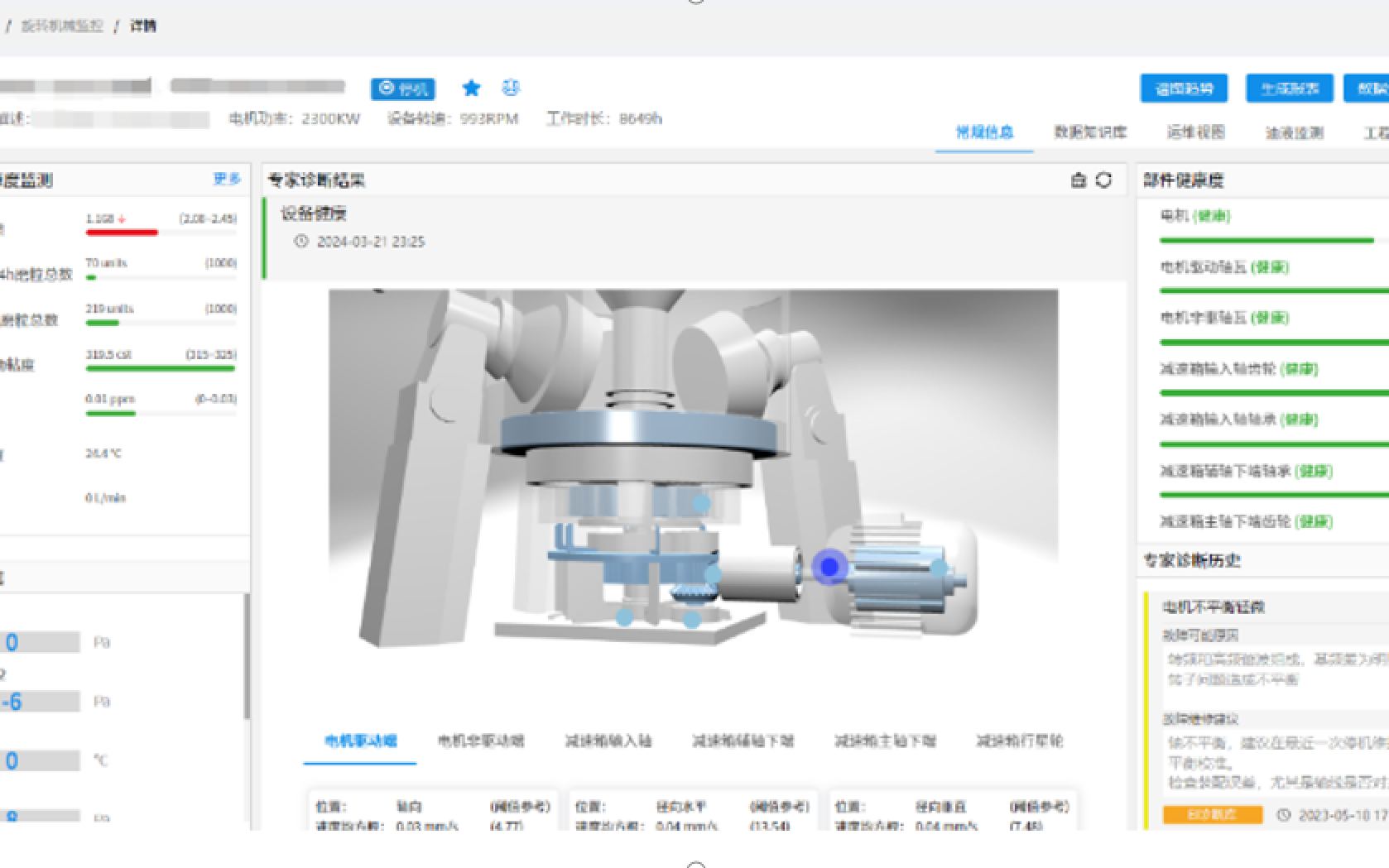
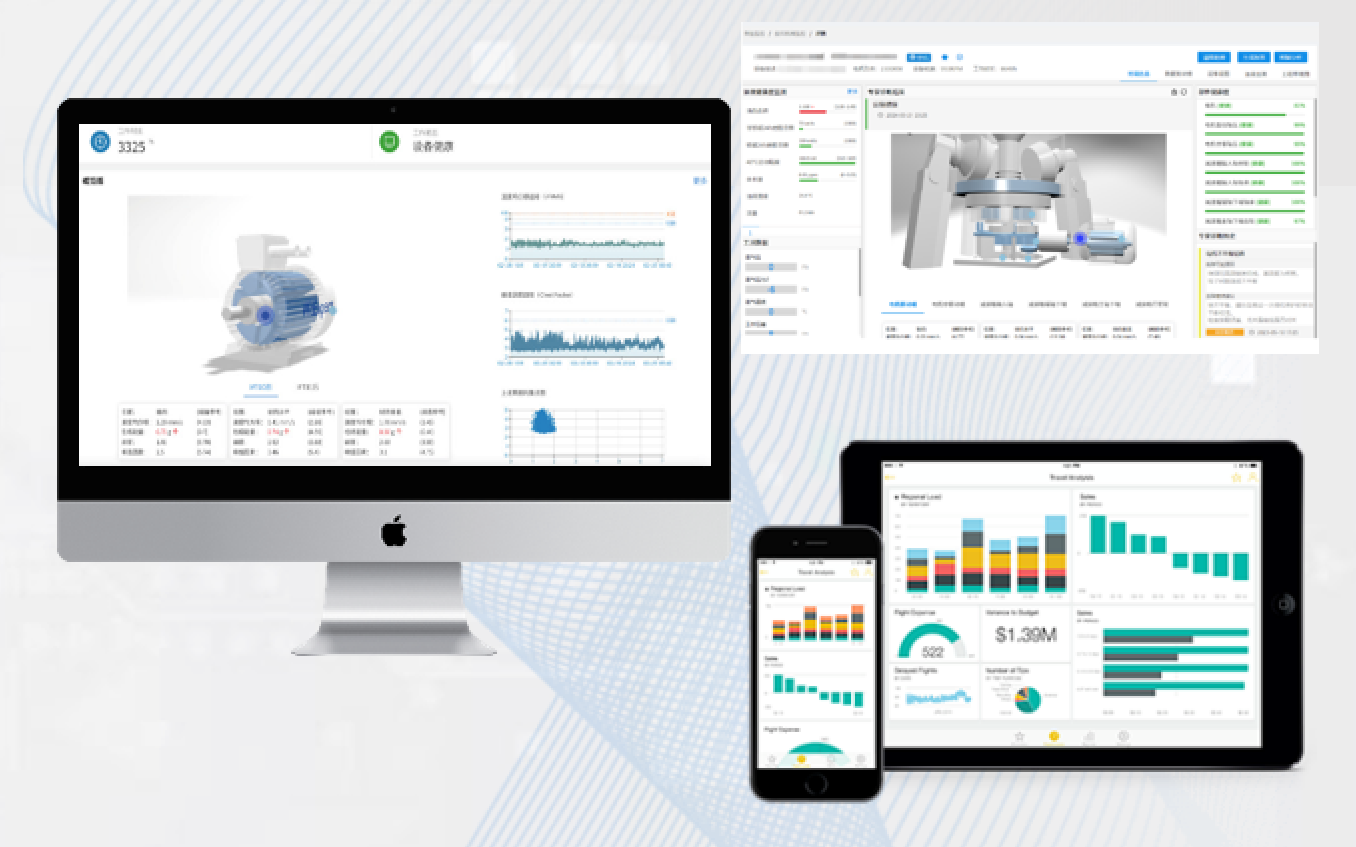
- Health dashboard: equipment health, alarms and trends visualized at a glance for O&M.
III. Core Function Showcase
Online monitoring and fault early-warning for rotating equipment such as motors, fans, air compressors and pumps, built on vibration mechanisms and mathematical models.
IV. Technical Architecture
A four-layer architecture from edge perception to upper-layer applications.
- Perception layer: AIS-G160 or vibration / temperature / current sensors collect rotating-equipment operating signals, pre-screened at the edge
- Analysis layer: WE performs feature extraction, mechanism-model matching and degradation-trend modeling, outputting health-index scores
- Decision layer: generates early warnings, maintenance advice and spare-parts plans based on thresholds and RUL
- Execution layer: integrates with CMMS/ERP for automatic dispatch, and links with DVS dashboards to show fleet-wide equipment health
V. Collaboration with Industrial Gateways
Data and capability collaboration between the platform and APM-G220 / AIS-T100 / AIS-G160.
- With AIS-G160: collects vibration / temperature / current registers and alarm data from rotating equipment, then uploads after edge-side pre-screening.
- With the DVS platform: monitoring data and health scores flow into the DVS unified dashboard and are correlated with process data for analysis.
- With APM-G220: for diagnostic IPCs requiring human intervention, the G220 provides remote screen takeover and scripted inspection.
VI. Applicable Scenarios
How the platform is deployed in typical industry scenarios.
- Machining / CNC: spindle vibration and temperature-rise monitoring to avoid tool crashes and scrap parts
- Robotics / automation: drive-chain and joint health monitoring
- Data center / server room: monitoring of critical auxiliaries such as air conditioners, pumps and compressed-air stations
- Chemical / energy DCS: predictive maintenance for pumps, fans and compressors
- Multi-site enterprise: centralized monitoring and unified early-warning for dispersed rotating equipment
VII. Value & Quantified Metrics
Measurable benefits delivered by the platform.
VIII. Deployment Boundaries & Compliance
Compliance & applicable boundaries
WE is an analytics platform that relies on sensor / protocol data access; sensitive industries must deploy it privately together with DVS on a dedicated / intranet network, keeping data within the enterprise boundary and with 4G not connecting to the public cloud. Prediction results serve as a reference for maintenance decisions and do not directly issue control commands to safety-related loops.
IX. FAQ
Frequently asked questions about the WE Predictive Maintenance Platform.
Which equipment is suitable for WE?
All kinds of rotating and transmission equipment — motors, fans, air compressors, pumps, CNC spindles, robot joints, etc.; anything with vibration / temperature / current signals can be monitored.
Can I deploy it without vibration sensors?
You can start with AIS-G160 to collect the equipment's existing current, temperature and alarm register data for lightweight monitoring; for high-precision fault diagnosis we recommend adding vibration sensing.
Can prediction results directly control shutdown?
The platform outputs health and early-warning as a basis for maintenance decisions; shutdowns involving safety interlocks are still executed by the original control system to avoid overreach.
What are the benefits over time-based maintenance?
It turns "blind time-based repair" into "state-based precise repair", reducing waste from premature replacement and losses from late failures, and cutting unplanned downtime.
Related Platforms & Products
DVS Data Collection & Visualization Platform
Device access, protocol models and visualization dashboards
→ Learn moreMEC Cloud Manufacturing Platform
Lightweight MES and cloud manufacturing for machining/injection production management
→ Learn moreAPM-G220 / AIS-T100 / AIS-G160
Companion industrial smart gateways, full-domain access from screen to protocol
→ View Products