LCD Panel Factory Environmental Monitoring System
Data Island Integration in Practice
A closed environmental monitoring system deployed when the LCD panel factory was built over a decade ago, with 80+ high-precision sensors, 5 display pages, no external interface, year-round manual screen-watching. AIS-T100 video OCR gateway automatically polls screens, bringing the island data into the plant-wide IOT platform within a week, resolving a data acquisition problem that plagued the customer for 3 months.
Core solution for this case
I. Customer Background
A leading domestic LCD (liquid crystal display) manufacturing enterprise; a workshop-level environmental monitoring system was deployed over a decade ago.
- The customer is a leading domestic LCD (liquid crystal display) manufacturing enterprise, ranked among the top five in capacity, with a high overall digitalization level.
- The factory was built over a decade ago. At the planning stage of a key process workshop, a workshop-wide environmental monitoring system was introduced as infrastructure for production environment assurance.
II. Core Pain Points
A system that is "screened, no interface, cannot be modified" keeps data locked in the command-room host year-round.
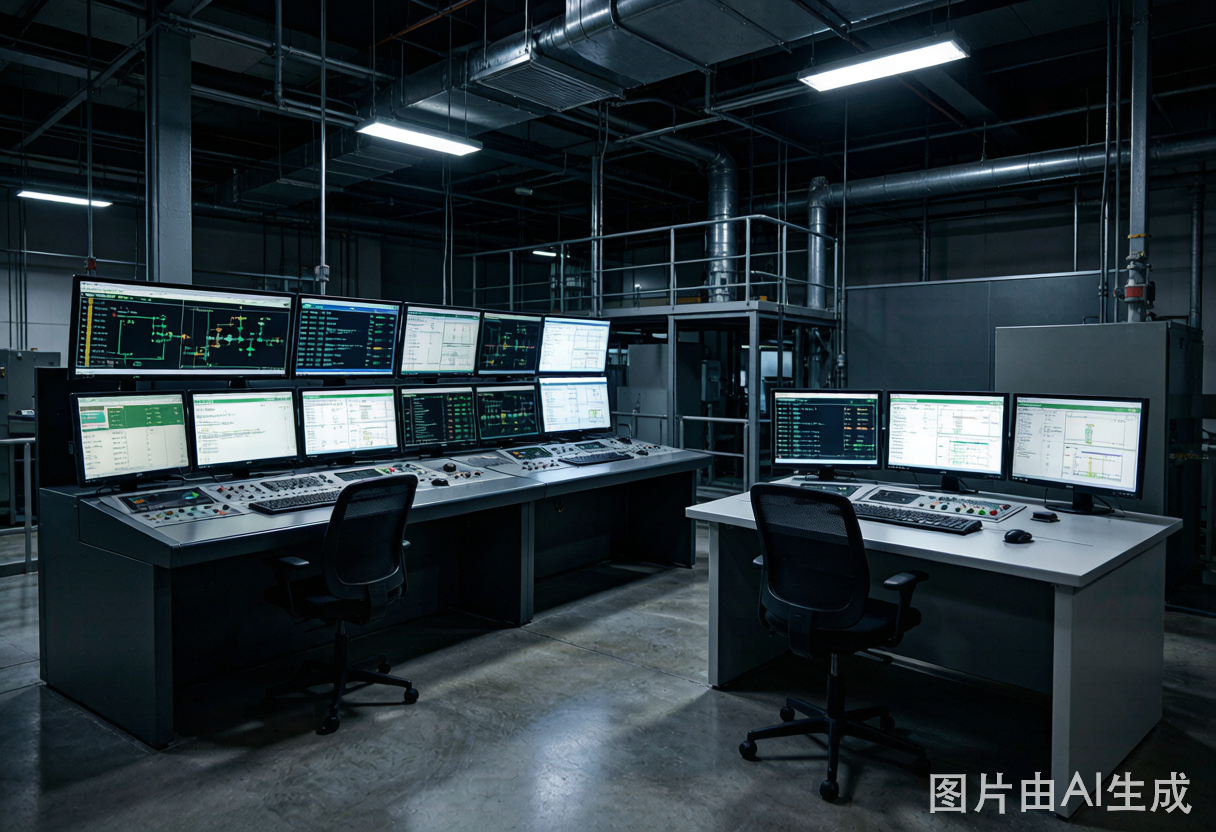
- The key process workshop embeds over 80 high-precision sensors monitoring temperature/humidity, harmful gases, etc. — critical for process stability and environmental safety.
- The system runs independently year-round: all sensor data is aggregated via serial and network ports to a host in the factory command room, displayed on split screens by client software from a Taiwan-based vendor, with threshold-based early-warning management.
- Because the system is closed with no external interface, environmental data cannot be reported automatically and requires a dedicated operator on duty watching for alarms — both labor-consuming and risking missed alarms.
III. Why Traditional Approaches Fail
Wanted to merge into the plant-wide IOT platform, but blocked by "no interface"; reopening by the original vendor is too costly.
- The factory later wanted to build a plant-wide IOT platform, merging this environmental data with energy, production etc. for unified management and correlation analysis.
- But the original system was designed without external data interfaces; data settles in the command-room host and cannot be auto-reported to upper platforms.
- If the original vendor (Taiwan-based) were asked to redevelop interfaces and upload modules, cost is high, cycle long, and the system has run over a decade with poor documentation and cooperation — unacceptable to the customer.
- This data island plagued the customer for about 3 months, delaying environmental data from merging into plant digitalization, becoming a short board for IOT platform rollout.
IV. Solution: AIS-T100 Non-intrusive Access
Do not modify the device, only read the screen — use video OCR to "see" and "send" the island data out.
- Deploy AIS-T100 video OCR data acquisition gateway, connecting to the environmental monitoring host video output (VGA / HDMI), taking stream at the video loop-out side without affecting the original client software.
- For the client software 5 display pages, configure automatic polling switch strategy and regional OCR recognition templates, capturing key readings page by page.
- The gateway captures real-time parameters of 80+ sensors from the 5 pages, performing edge-side data cleaning, timestamp alignment and anomaly pre-screening.
- Via standard protocols (MQTT / Modbus TCP), structured data is aggregated and reported to the factory IOT platform, unified modeling with production and energy data.
- Throughout, no modification to the original system, no production interruption, no protocol/interface opening required; the original vendor needs no redevelopment or cooperation.
V. Results
From on-site deployment to data merge, completed within a week; the 3-month data island problem is cracked.
- From on-site deployment to data merging, completed within one week — the customer's 3-month environmental data acquisition problem was solved.
- Dedicated monitoring labor was released: no more dedicated screen-watching; alarm and threshold management shifted to unified monitoring and push from the IOT platform.
- After environmental data enters the IOT platform, it can be correlated with production tempo, energy consumption and other data, supporting workshop-level "environment–process" linkage optimization.
VI. Why AIS-T100
"Screened, no interface, cannot be modified" is exactly T100 typical applicable object.
- AIS-T100 core idea is "no device modification, only screen reading": using the device native video output, perform external image capture and text recognition, converting visible structured parameters on screen into computable, reportable data.
- Compared with the original vendor reopening interfaces or rebuilding from scratch, T100 unblocks the data island at lowest cost and risk — ideal for devices that are "screened, interfaceless, unmodifiable".
- Supports multi-page adaptive polling, model management, edge computing cleaning and early warning, and reports upward via MQTT / TCP-IP / Modbus to various cloud platforms and systems — a key node for networking island-style data systems.
VII. FAQ
High-frequency questions about "legacy closed island system" access.
The original system has no external interface at all — can it still be acquired?
Yes. AIS-T100 captures the host screen video; as long as there is a visible display interface, no protocol or interface needs to be opened by the original vendor, nor does the original system need modification.
5 pages, 80+ sensors — can recognition keep up?
T100 supports multi-page adaptive polling and regional OCR, capturing page by page on a set cycle; second-level frame extraction and edge cleaning ensure real-time performance; 80+ parameters can be stably, continuously acquired.
Will the access process affect the original system operation?
No. T100 takes signal at the video loop-out side; this case only does data acquisition without enabling reverse control, writing no commands to the original system; the original client software runs normally and alarm logic is unchanged.
How does the acquired data enter the IOT platform?
The gateway edge-side converts screen parameters into structured data, uploading upward via MQTT / Modbus TCP / TCP-IP etc., integrable with mainstream IOT platforms and historian databases, into a unified data model.
Related Scenarios & Products
SMT / Electronics Assembly
Multi-brand device screen parameter acquisition & correlation
→ View ScenarioInjection Molding Legacy Controllers
Automatic screen-parameter acquisition for 60+ multi-brand legacy injection molding machines
→ View Case