SMT Reflow Oven Fan
Vibration Monitoring - Rotating Machinery Condition Monitoring
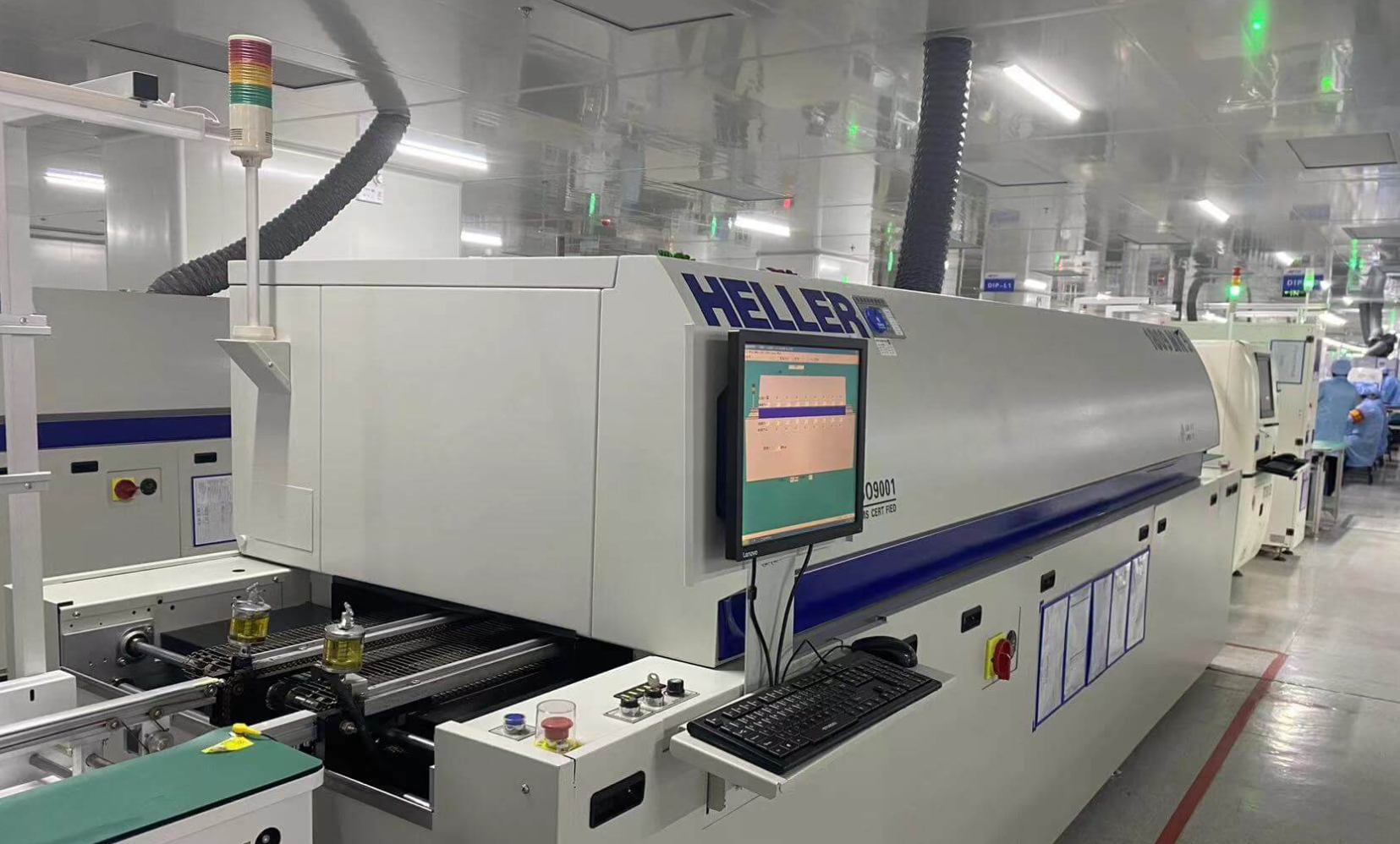
A large electronics manufacturing OEM; the SMT line reflow oven twice suffered temperature-zone loss of control and forced downtime for maintenance due to sudden cooling-fan stoppage; the oven interior temperature zones reach up to 350 C and must be naturally cooled for hours before the cover can open, with a single incident downtime exceeding 4 hours. This solution adds high-precision vibration sensors to 24 upper/lower cooling fans + 3 cooling-zone fans, and current transformers on heating-resistor supply lines, acquiring 3-axis vibration and heating current in real time, relying on the WE predictive-maintenance platform to realize online monitoring and early warning of fan health and heating-wire status, shifting maintenance from "post-failure repair" to "pre-failure warning", reducing personnel maintenance cost by 36%.
Maintenance cost down 36%, shifting the reflow oven fans from "post-failure repair" to "pre-failure warning".
Core solution for this case
I. Customer Background
A large electronics manufacturing OEM; the SMT line reflow oven twice suffered temperature-zone loss of control and long downtime due to cooling-fan failure.
- The customer is a large electronics manufacturing OEM; the SMT line reflow oven has twice suffered cooling-fan failures, where sudden fan stoppage caused the temperature zone to lose temperature control, forcing a production stop for maintenance.
- The reflow oven interior temperature zones reach up to 350 C; after fan stoppage, natural cooling must be used to slowly lower temperature before the cover can open for maintenance and fan replacement; a single incident causes line downtime exceeding 4 hours.
- The reflow oven's built-in monitoring and warning only runs locally on the machine, with the possibility that personnel fail to identify in time or misoperate; cooling fans are rotating machinery requiring periodic inspection and scheduled maintenance, with relatively high maintenance cost.
II. Core Pain Points
One fan stoppage = temperature-zone loss of control + long downtime; local warning relies on people watching; rotating-machinery maintenance cost is high.
- Sudden fan stoppage = long downtime: Sudden cooling-fan stoppage causes the reflow oven temperature zone to lose temperature-control capability, forcing a stop; interior zones reach 350 C and must be naturally cooled for hours before the cover can open, a single incident downtime exceeding 4 hours, with large capacity loss.
- Local warning relies on people watching: The reflow oven's built-in monitoring warning runs only locally on the machine, with the possibility that personnel fail to identify in time or misoperate (wrongly clearing alarms), once missed it evolves into equipment failure or process error.
- Rotating-machinery maintenance cost high: Cooling fans are rotating machinery requiring periodic inspection and scheduled maintenance, relying on people, costly, and hard to cover the real-time status of all fans.
- Heating-resistor aging imperceptible: Heating resistors working long-term age, causing insufficient heating power and abnormal heating-up; traditional methods hardly judge their health in real time, often exposed only at process deviation.
III. Why Traditional Approaches Fail
Manual patrol cannot catch sudden anomalies; local alarms unattended get missed; scheduled maintenance "one-size-fits-all" is both wasteful and misses hidden dangers.
- Manual periodic patrol: Relying on manual periodic patrol and scheduled maintenance cannot capture sudden fan anomalies in real time; fan stoppage is often discovered only after failure and line stop, with losses already incurred.
- Local machine alarm: The reflow oven's built-in alarm runs only locally; night / unattended periods are easily missed, and misoperation may clear alarms, making warning illusory.
- Experience-based scheduled maintenance: Fixed-cycle "one-size-fits-all" maintenance cannot target the true health status of individual fans, both over-maintaining and wasting labor, and possibly missing early hidden dangers of individual fans.
- Heating wire found post-hoc: Heating-resistor aging and abnormal heating-up are usually exposed only at process deviation and product-quality problems, already causing batch impact, hard to predict beforehand.
IV. Solution: Vibration + Current Sensing - WE Predictive Maintenance
Give fans a "stethoscope" and heating wires an "electric meter"; use sensing data to shift maintenance from post-failure repair to pre-failure warning.
- Fans equipped with high-precision vibration sensors: On the reflow oven's 24 upper/lower cooling fans + 3 cooling-zone fans, a total of 27 fans are equipped with wired high-precision vibration sensors, covering all key rotating parts.
- Real-time 3-axis vibration acquisition: Sensors acquire 3-axis vibration values of fans (acceleration, vibration offset and other parameters) in real time, performing continuous condition monitoring of cooling fans.
- Precisely identify fan speed gear: Through vibration-value characteristics, the current speed gear of the fan can be precisely identified, grasping the actual working condition and load status of each fan.
- Heating wire equipped with current transformer: Current transformers are clamped on the heating-resistor supply lines, acquiring the operating current of heating resistors in real time, without modifying wiring or disturbing the original power supply.
- Current algorithm judges heating-wire health: Comparing real-time operating current with historical data, combined with the heating-current algorithm, the working health of heating resistors is judged in real time, discovering aging and insufficient power in advance.
- WE platform unified warning: Vibration and current data are aggregated to the WE predictive-maintenance platform, building fan-health models and heating-wire-status algorithms, real-time anomaly warning, shifting maintenance from "post-failure repair" to "pre-failure warning".
V. Value Comparison & Results
Upgrade from "fan stoppage, 4-hour repair" to "vibration / current anomaly, pre-failure warning".
| Comparison | Traditional Manual Patrol + Local Alarm | WE Predictive Maintenance Solution |
|---|---|---|
| Anomaly discovery timing | Known after failure and line stop | Vibration / current anomaly warns; intervene before failure |
| Fan status | Manual patrol; hard full coverage, hard real-time | 27 fans 3-axis vibration real-time online monitoring |
| Speed gear | Cannot sense actual fan working gear | Vibration characteristics precisely identify fan speed gear |
| Heating-wire health | Aging, abnormal heating-up exposed post-hoc | Current transformer + algorithm real-time health judgment |
| Warning reliability | Local alarm relies on people watching; easy miss / false clear | Platform unified warning; not dependent on manual watch |
| Maintenance cost | Scheduled "one-size-fits-all" maintenance; labor waste | Targeted maintenance by health; cost down 36% |
VI. Why WE Predictive Maintenance Platform
"Multi-source sensing fusion + health model + pre-failure warning" exactly covers all demands of rotating-machinery condition monitoring.
- Multi-source sensing fusion: Vibration (3-axis acceleration / offset) and current (heating-wire operating current) are uniformly accessed; one platform sees the health of all fans and heating wires.
- Health model: Vibration characteristics can identify fan speed gear; current algorithm can judge heating-wire health; upgrading "whether it can rotate" to "whether healthy, when to maintain".
- Pre-failure warning: Real-time anomaly warning replaces 4+-hour long downtime repair, avoiding capacity loss from passive cooling of 350 C zones.
- Precise maintenance cost reduction: Targeted maintenance based on the true health of individual devices reduces over-maintenance and missed inspections; in this case personnel maintenance cost reduced by 36%.
VII. FAQ
High-frequency questions about "reflow oven fan vibration monitoring + heating-wire current monitoring".
How are vibration sensors installed; will it affect production?
Wired high-precision vibration sensors are directly installed on each fan, a non-intrusive installation that does not modify the machine's original structure and control logic; the current transformer is clamped on the heating-resistor supply line, also without modifying wiring or disturbing the original power supply; the installation process does not affect normal production.
Can it identify which speed gear the fan is currently in?
Yes. The 3-axis vibration values acquired by the sensor contain rich speed characteristics; the WE platform can precisely identify the current speed gear of the fan through vibration characteristics, grasping the actual working condition and load status of each fan.
How to judge heating-resistor aging and insufficient heating?
Current transformers are clamped on the heating-resistor supply lines, acquiring operating current in real time; the WE platform compares real-time current with historical data and combines the heating-current algorithm to judge the heating resistor's health in real time, discovering aging and insufficient power in advance.
What is the difference from the reflow oven's built-in alarm?
The reflow oven's built-in alarm runs only locally, relying on personnel watch and easily missed or falsely cleared; this solution aggregates data to the WE predictive-maintenance platform for unified warning, not dependent on manual screen-watching, and can fuse vibration + current multi-dimensional features for earlier, more reliable anomaly identification.
How much can personnel maintenance cost be reduced?
In this case, through fan-health analysis, targeted maintenance is performed on fans that truly need it, avoiding the labor waste of scheduled "one-size-fits-all" maintenance; personnel maintenance cost reduced by 36%.
VIII. WE Predictive Maintenance Platform - Monitoring Objects & Sensing Parameters Supported
This case centers on reflow-oven fan vibration and heating-wire current monitoring. The WE predictive-maintenance platform targets condition monitoring of rotating machinery and power-distribution components. The following are typical monitoring objects and sensing parameters (extendable on site), as a reference for solution selection and sensing selection.
| Monitoring Object | Typical Equipment | Sensing Method | Monitoring Parameters |
|---|---|---|---|
| Rotating machinery | Cooling / cooling-zone fans, motors, pumps, air compressors, gearboxes, bearings | Wired high-precision vibration sensor (IEPE, etc.) | 3-axis vibration (acceleration / velocity / displacement), speed-gear identification, impact and wear trend |
| Heating / power distribution | Heating resistor, heating tube, heating rod, power supply circuit | Current transformer (clamped on supply line) | Operating current, power, heating curve, aging and insufficient-power judgment |
| Temperature | Temperature zone, cabinet, bearing seat, pipeline | PT100 / thermocouple | Temperature, heating-rate, over-temperature warning |
| Transmission mechanism | Belt, coupling, transmission shaft | Vibration + temperature composite | Abnormal impact, eccentricity, looseness, wear trend |
Related Scenarios & Products
SMT / Electronics
Equipment status, parameters, fault & event alarm log parsing acquisition
→ View ScenarioWE Predictive Maintenance Platform
Equipment health prediction & predictive maintenance
→ View PlatformAIS-G160 Protocol Gateway
Edge aggregation of vibration / current and other sensing signals for upload
→ View Product