SMT Line Equipment Data Acquisition
& Yield Optimization Analysis
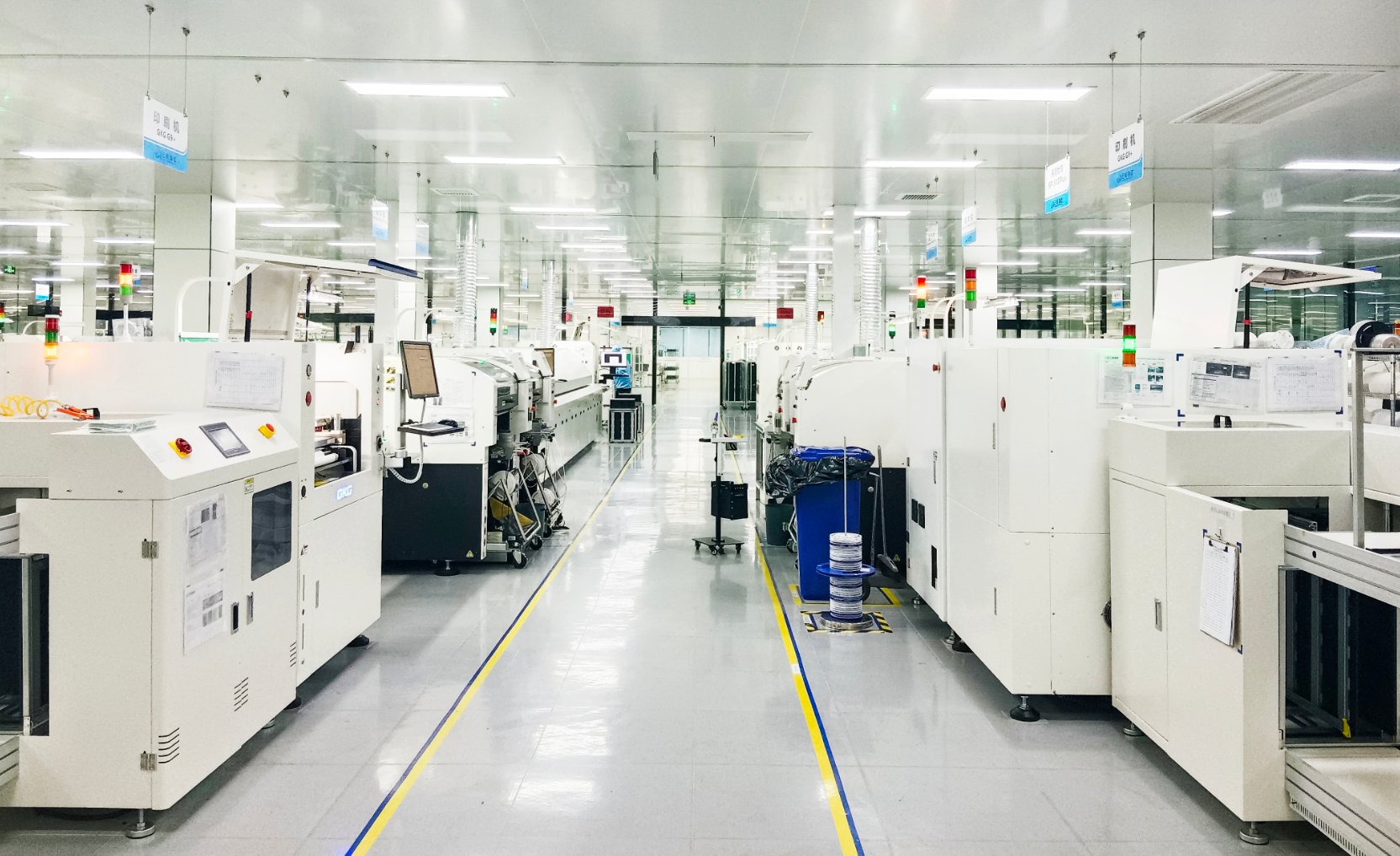
A large electronics assembly OEM undertaking OEM for many major European and American hardware companies, with monthly output 50-100K. PCBA board overall yield long stuck at about 95%. Because boards contain many high-value chips and the whole-board cost is high, a 5% defect rate is an indicator that customers and the OEM must continuously optimize. AIXOT, together with an AI algorithm partner, uses G160 to acquire real-time parameters of all line equipment (mainly via log / database acquisition); and T100 video OCR to crack the 17-year-old, original-vendor-merged, log and database both encrypted old reflow oven (24 temperature zones, 48 parameters + alarms) data island, uploading all to DVS and connecting to the upper AI algorithm. Based on this, the AI team found that printer parameters caused 70% of defects (excess/insufficient solder, solder bridges), and through parameter tuning reduced the defect rate from 5% to 2.3%, winning a benchmark sample line and group award.
Defect rate reduced from 5% to 2.3%; printer parameters are the root cause of 70% of defects — the G160+T100+DVS+AI combination delivers true yield optimization.
Core solution for this case
I. Customer Background
A large electronics assembly OEM undertaking OEM for major European and American companies, with monthly output 50-100K, PCBA yield long stuck at 95%.
- The customer is a large electronics assembly OEM undertaking OEM for many major European and American hardware companies, with monthly output about 50-100K, dense lines and fast cadence.
- PCBA board overall yield has long remained at about 95%; because boards contain many high-value chips and the whole-board cost is high, a 5% defect rate is an indicator that customers and the OEM must continuously optimize and reduce.
- The reflow oven in the line is a 17-year-old legacy device; the original vendor has been merged by another company and technical support cannot be found; its logs and database are both encrypted, data cannot be read, and key process parameters have long been an island.
II. Core Pain Points
Yield stuck at 95%, old reflow oven data encrypted unreadable, front-back process data fragmented, defect root cause hard to locate.
- 5% yield bottleneck: PCBA overall yield long stuck at 95%; the 5% defect rate, due to high-value chips and high whole-board cost, causes significant loss and must be continuously optimized and reduced.
- Old reflow oven data island: A 17-year-old device, original vendor merged, logs and database both encrypted, 24-zone key process data unreadable, process status invisible.
- Front-back process data fragmented: Printer, SPI, placer, reflow oven, AOI equipment data are independent of each other, lacking a unified foundation, hard to do end-to-end correlation analysis.
- Defect root cause hard to locate: Traditional methods hardly associate defect phenomena (excess/insufficient solder, solder bridges, etc.) with specific equipment parameters; optimization often relies on experience, with no basis to rely on.
III. Why Traditional Approaches Fail
Encrypted device no interface, experience-based parameter tuning, single-point acquisition no correlation - yield optimization lacks data leverage.
- Legacy device encrypted / no interface: The reflow oven logs and database are both encrypted, the original vendor has been merged and no one supports it; conventional protocol acquisition and interface development are both infeasible, key zone data unreadable.
- Experience-based parameter tuning: Process optimization relies on master workers' experience, hard to quantify the association between "minor parameter tweak" and "slight yield change", easily going off direction.
- Single-point acquisition, no correlation: Each equipment is isolatedly acquired or only manually recorded, lacking a unified data foundation, unable to complete the end-to-end correlation of printer-SPI-placer-reflow-AOI.
- Defect analysis lagging: Defects are often exposed only at test / AOI, with long back-tracing cycle, and hard to accurately attribute to specific process and parameters, with slow closed loop.
IV. Solution: G160 + T100 + DVS + AI Data Foundation
Protocol devices acquired by G160, encrypted old devices seen by T100, dual-source aggregated by DVS, upper-layer AI does correlation and modeling.
- G160 acquires real-time parameters of all line equipment: Mainly via log / database acquisition, connecting to SMT line printers, SPI, placement machines, AOI and other equipment, acquiring key process parameters in real time.
- T100 cracks the old reflow oven data island: For the 17-year-old, encrypted, unsupported old reflow oven, T100 takes over its screen video signal, video OCR recognizes the software interface, extracting the upper and lower 24 zones - 24 real-time temperatures + 24 set temperatures (48 parameters total) + bottom alarm information (including date/time and Chinese/English plus-symbol error / alarm information).
- All uploaded to DVS data acquisition & visualization platform: G160 / T100 dual-source data is uniformly aggregated to DVS, performing screen-layer + protocol-layer fusion, cleaning and timestamp alignment, visualization, building a unified data foundation.
- Connect to upper-layer AI algorithm application: The DVS data foundation connects to the AI algorithm team, establishing real-time acquisition and analysis capability of SMT equipment key process parameters, supporting on-site control and subsequent process-parameter optimization.
- Front-back process end-to-end correlation: Connect printer-SPI-placer-reflow-AOI data, completing data correlation between front and back processes, turning "isolated parameters" into a "process-chain view".
- Printer-parameter-SPI-dimension correlation modeling: Using QR code or time dimension, correlate solder-paste printing parameters with dimensions detected by SPI; the AI algorithm team builds a table that can be analyzed and modeled in real time, quickly locating problems and proposing optimized parameters for each equipment.
V. Value Comparison & Results
Upgrade from "yield 95%, unknown root cause" to "defect rate 2.3%, printer accounts for 70% precise attribution".
| Comparison | Traditional Manual Tuning + Data Island | G160 + T100 + DVS + AI Solution |
|---|---|---|
| Legacy device data acquisition | Reflow oven log / database encrypted, vendor merged, unreadable | T100 video OCR cracks, 48 params + alarms fully acquired |
| Data foundation | Each equipment fragmented, manual records, no unified foundation | DVS aggregates dual-source data, screen + protocol fusion |
| Process correlation | Printer / SPI / placer / reflow / AOI hard to correlate root cause | Front-back process end-to-end correlation, process-chain visible |
| Defect localization | Experience-based, lagging, hard precise attribution | AI correlation modeling, locates printer at 70% of defects |
| PCBA defect rate | About 5% | After parameter tuning reduced to 2.3% |
| Value recognition | None | Benchmark sample line + group-wide multi-plant learning and award |
VI. Why G160 + T100 + DVS
"Protocol devices acquired by G160, encrypted old devices seen by T100, dual-source aggregated by DVS" - exactly covers the full-scene line data acquisition.
- Dual-source covers the whole line: G160 acquires devices with protocols and interfaces (printer / SPI / placer / AOI) via log / database; T100 specializes in the screens of interface-less, encrypted, vendor-disappeared old devices (old reflow oven) - whatever has a screen and a protocol can be acquired.
- DVS dual-source fusion: Screen-layer + protocol-layer data is uniformly managed, cleaned and timestamp-aligned, visualized, building an AI-ready unified data foundation, avoiding data going their own ways.
- AI-ready data foundation: Structured, time-series-aligned, cross-device-correlated data enables the AI algorithm team to skip underlying acquisition and directly focus on process modeling and yield optimization.
- End-to-end optimization closed loop: From acquisition, correlation, analysis to parameter tuning, a closed loop is formed, turning "passive firefighting" into "active optimization", with yield improvement quantifiable and replicable.
VII. FAQ
High-frequency questions about "SMT line data acquisition + yield optimization".
The 17-year-old old reflow oven has both logs and database encrypted - can it still be acquired?
Yes. The AIS-T100 video OCR gateway takes over the old reflow oven's screen video signal, recognizes its software interface, and extracts 24-zone real-time temperature + 24 set temperatures (48 parameters total) + bottom alarm information (including date/time and Chinese/English plus-symbol error / alarm), without original-vendor support and without modifying the system.
How do G160 and T100 divide work on the line?
G160 mainly acquires via log / database, connecting to SMT equipment with protocols and interfaces (printer, SPI, placer, AOI, etc.); T100 specializes in the screens of interface-less, encrypted, vendor-disappeared old devices (old reflow oven). The two data sources are uniformly aggregated to DVS, forming a dual-source fusion foundation.
How to associate defect phenomena with specific equipment parameters?
The AI algorithm team correlates solder-paste printing parameters with dimensions detected by SPI using QR code or time dimension, building a table that can be analyzed and modeled in real time, quickly locating problem processes and parameters, and proposing optimized parameters for each equipment.
What is the actual yield-improvement effect?
Based on one month of process-parameter dataset and corresponding slight yield changes, the AI found that printer-parameter settings caused defects accounting for 70% of the entire PCBA defect problems (mainly including excess solder, insufficient solder, solder bridges and other factors); through parameter tuning, the defect rate dropped from 5% to 2.3%.
What is the long-term value of this project to the customer?
This line became the customer's benchmark sample line, winning group-wide multi-plant collective learning and a benchmark award; at the same time, a sustainably optimizable data foundation and AI analysis capability were accumulated, and the yield-optimization experience can be replicated and extended to other plants and lines.
VIII. PLC & Controller Brands/Models Supported by G160 Protocol / Database Acquisition
In this case, G160 acquires real-time parameters of SMT line equipment via log / database. The following are mainstream PLC and controller brands and models verified for data acquisition by G160 (g160_compat.json is the authoritative source); in addition, AIS-T100 video OCR covers various industrial screens / old-device software interfaces (model-independent), and the two complement each other to achieve line data acquisition with no blind spots.
| Manufacturer / Brand | Typical Series & Models | Comms | Protocol / Driver |
|---|---|---|---|
| Siemens | S7-200 (PPI), S7-300/400 (MPI), S7-200 Smart, S7-1200, S7-1500, LOGO! | Serial / Ethernet | S7 PPI, MPI, S7comm, Modbus TCP |
| Mitsubishi | FX0/FX1/FX2, FX3U/3G, Q series, FX3U-ENET, FX5U, QJ71E71 | Serial / Ethernet | Mitsubishi MC, MELSEC, SLMP |
| Rockwell AB | Micro800 | Ethernet | EtherNet/IP |
| LS Electric | XGT, XGB, XBC-DN32U | Serial / Ethernet | Private protocol |
| Modbus (Modicon) | Standard Modbus devices | Serial / Ethernet | Modbus RTU / ASCII / TCP / RTU over TCP |
| Schneider | Full series | Serial / Ethernet | Modbus RTU / TCP |
| HollySys | LE/LK220, LK210 | Serial / Ethernet | Modbus RTU |
| THINGET (Xinje) | XD/XL, XC | Serial / Ethernet | Modbus TCP |
| Inovance | H1U/H2U, H3U, H5U | Serial / Ethernet | Modbus |
| OMRON | CJ/CS, CV, CP | Serial / Ethernet | OMRON FINS, Ethernet TCP |
| FATEK | Full series | Serial / Ethernet | Private protocol |
| Delta | DVP, AS228T | Serial / Ethernet | Modbus RTU / TCP |
| Panasonic | FPX, FP | Serial / Ethernet | MEWTOCOL_COM |
| Haiwell | Full series | Serial | Modbus RTU / ASCII |
| Kewei | LP series | Serial | Modbus RTU / Private protocol |
| OPC UA | Software / devices supporting OPC UA | Ethernet | OPC UA |
| Power / Environmental / Building Automation | Smart meters, environmental monitoring, building-automation devices | Serial / Ethernet | CJ/T188, DL/T645, HJ212, BACnet |
Related Scenarios & Products
SMT / Electronics
Multi-brand equipment data acquisition, parameter correlation & yield optimization
→ View ScenarioDVS Data Acquisition & Visualization Platform
Screen-layer + protocol-layer dual-source data fusion foundation
→ View PlatformLegacy Injection-Molding Controllers
Automatic screen-parameter acquisition for 60+ multi-brand legacy injection-molding machines
→ View Case